
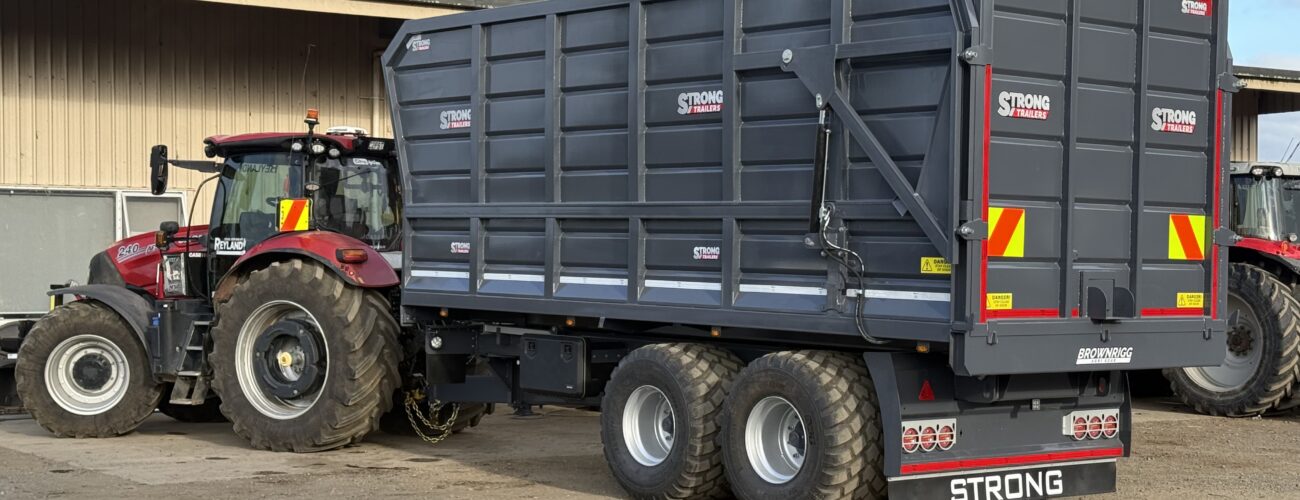
Choosing the right agricultural trailer can make a real difference to how you move silage, grain, bales, soil, aggregates and other materials around your farm or worksite. The right setup depends on what you need to carry, how much you need to move, the conditions you work in and whether you need a trailer for one specific job or several different applications.
For farmers, agricultural contractors and civil contractors, a high-capacity trailer is an investment that needs to suit the work it will do throughout the year. Capacity, construction, suspension, tyres, braking systems and the ability to change configurations are all important considerations.
Brownrigg Agri Gear supplies high-capacity agricultural and civil trailers in New Zealand, working with established manufacturers to provide equipment for large farming operations, agricultural contractors and civil contractors. It no longer sells the smaller 8- to 12-tonne trailers typically towed behind a small farm tractor. Its range includes multi-purpose Donnelly trailers, SlurryKat silage and dump trailers, Strong multi-purpose trailers, and Tyrone low loaders for transporting machinery and other heavy equipment.
This guide explains the main types of agricultural trailers available in NZ, what to look for when comparing models, and how to choose a trailer that suits your operation.
In This Guide
What Types of Agricultural Trailers Are Available in NZ?
Agricultural and civil trailers come in several configurations, each designed to handle particular materials and jobs. Some are built primarily for transporting silage, while others can carry grain, bales, soil, aggregates or machinery.
The main types include multi-purpose trailers, silage trailers, tipping trailers, drop-side trailers, grain trailers, flatbed trailers and low loaders.
Is There a Difference Between a Farm Trailer and an Agricultural Trailer?
The two terms are often used interchangeably, but they usually describe different classes of equipment.
A farm trailer typically refers to a smaller trailer, often in the 8- to 12-tonne range, towed behind a small tractor for general jobs around a property.
Agricultural trailers are built for heavier, higher-volume work. They include high-capacity silage trailers, multi-purpose dump trailers and grain trailers used by large farming operations and agricultural contractors. Civil trailers, such as dump trailers and low loaders, are used for moving soil, aggregates and heavy machinery.
Brownrigg Agri Gear no longer sells small farm trailers. Its range is made up of high-capacity agricultural and civil trailers designed for larger operations and contractors.
The most suitable trailer depends on the intended application, the required load capacity and the towing equipment available.
What Is a Silage Trailer, and What Is It Used For?
A silage trailer is designed to transport harvested forage crops during silage-making operations. It needs to accommodate bulky loads and withstand repeated loading, unloading and transport.
Silage trailers are commonly used by dairy farms, livestock farms and agricultural contractors during harvest and feed-storage operations. Their capacity can affect how frequently a trailer needs to return to the loading point, making body size and practical payload important considerations.
Brownrigg Agri Gear offers silage trailer options from Donnelly and SlurryKat, including multi-purpose models that can be adapted for other types of work.
For example, the 16-tonne Donnelly trailer has a listed silage bin capacity of 34 cubic metres, while the SlurryKat 25-tonne SDT has a 34-cubic-metre silage bin. These figures describe the respective bin volumes, not the weight of silage each trailer can legally carry. Actual payload depends on the material and applicable weight limits.
What Is a Tipping Trailer, and When Do You Need One?
A tipping trailer uses a hydraulic system to raise the trailer body and discharge its load. This is useful when transporting loose materials that need to be unloaded without manually removing them.
Typical applications include moving soil, gravel, aggregates, fertiliser and other bulk materials, depending on the trailer’s design and suitability for the load.
Tipping trailers can be particularly useful for farms and contracting businesses that regularly move materials between different locations.
When comparing tipping trailers, consider the rated payload, body volume, tipping mechanism, suspension and the type of material being carried. The trailer must be suitable for both the load and the conditions in which it will be tipped.
What Is a 3-in-1 Agricultural Trailer?
A 3-in-1 agricultural trailer is a multi-purpose trailer that can be configured for different jobs rather than being limited to one body type.
Depending on the model, it can be used as a flatbed, a silage trailer or a tipping trailer with sides for carrying bulk materials. Some configurations are also suitable for moving bales.
This versatility can be useful for farms and agricultural contractors that handle different materials throughout the year. Instead of buying several specialised trailers, an operator may be able to use one trailer in different configurations.
Brownrigg Agri Gear’s Donnelly range includes 3-in-1 multi-purpose trailers available in several sizes. Its Strong 22-tonne trailer also has three listed configurations: a 42-cubic-metre silage bin, a 28-cubic-metre grain bin and a 14-cubic-metre dump trailer.
These configurations illustrate how trailer choice can be based on the range of jobs an operation needs to complete, rather than a single seasonal requirement.
What Is the Difference Between a Flatbed Trailer and a Drop-Side Trailer?
A flatbed trailer has an open platform that can accommodate a range of loads, subject to the trailer’s dimensions, rated capacity and securing arrangements.
It can be useful for carrying bales, equipment and other loads that do not require an enclosed body.
A drop-side trailer has sides that help contain the load. Depending on its design, the sides may be removable or configured to suit different applications.
Drop sides are useful for carrying materials that could otherwise shift or fall off the platform. Some multi-purpose trailers can be converted between flatbed and other configurations.
The main considerations are the size and shape of the load, the access required for loading and unloading, and whether the trailer needs to handle loose materials as well as larger individual items.
What Are Grain Trailers Used For?
Grain trailers transport harvested grain and other suitable bulk agricultural materials. Their capacity and body configuration need to match the material being moved and the equipment used to load and unload it.
A grain trailer’s cubic capacity is particularly relevant because grain can have a different bulk density from silage, soil or other materials.
A larger body does not automatically mean a greater permissible payload. The weight of the material must remain within the trailer’s rated capacity and applicable operating limits.
For operations that transport several types of crops or bulk materials, a multi-purpose trailer with a suitable grain configuration may provide greater flexibility.
The Strong 22-tonne trailer available through Brownrigg Agri Gear, for example, is listed with a 28-cubic-metre grain bin alongside its silage and dump configurations.
What Type of Trailer Is Best for Transporting Bales?
The right trailer for transporting bales depends on the bale size, the number of bales required per load, the loading method and the distances involved.
A flatbed or bale trailer can provide a practical platform for transporting bales. Trailer dimensions, load-securing points and any extensions should be considered when assessing how a particular model will suit the operation.
Some multi-purpose trailers can also be adapted for bale transport. Donnelly trailers, for example, offer an optional 1,100mm-long bale extension on the models where this option is specified.
For larger contracting operations, a dedicated bale or flatbed trailer may be more suitable, particularly when bale transport is a regular, high-volume task.
What Is a Low Loader Trailer, and What Machinery Can It Transport?
A low loader is a transport trailer designed to carry heavy machinery and equipment. Depending on its specifications, it may be used to move excavators, wheel loaders and other machinery between farms, construction sites and worksites.
Low loaders are relevant to agricultural contractors who need to move equipment between jobs, as well as civil contractors transporting machinery for earthmoving and construction work.
Important considerations include the nett payload, deck dimensions, ramp design, suspension, braking system and the overall dimensions of the machinery being transported.
Brownrigg Agri Gear offers Tyrone low loaders in several sizes. Its listed models include 19-tonne, 21-tonne, 27-tonne and 30-tonne Pro models, with the wider range subject to model specifications and availability. Tyrone also offers flatbed low loader configurations.
For a specific example, the Tyrone 27-tonne tri-axle low loader is listed with a 22-tonne nett payload and a 2.5-metre width. Its deck length from the headboard to the ramps is listed as eight metres. A separate 27-tonne flatbed low loader is listed with a 9.7-metre length from the headboard to the ramps.
These measurements refer to different models, so they should not be treated as interchangeable specifications.
Are There Trailers Suitable for Both Agricultural and Civil Contracting?
Yes. Some multi-purpose and tipping trailers can be used for agricultural work and suitable bulk-material transport in contracting applications. Low loaders can also serve both industries when transporting machinery.
For example, a trailer used for silage during harvest may be configured for other suitable materials at different times of the year. A dump configuration may be useful for transporting soil or aggregates, while a low loader is designed for moving machinery rather than loose bulk loads.
The key is to choose a trailer designed for the intended application. Not every agricultural trailer is suitable for every construction load, and a trailer’s advertised capacity does not override its technical specifications or applicable transport requirements.
Brownrigg Agri Gear works with farmers, agricultural contractors and civil contractors to provide trailer options for a range of applications.
How Do You Choose the Right Agricultural Trailer for Your Needs?
The best agricultural trailer is one that matches the work you actually do. Before comparing brands and specifications, identify your regular loads, seasonal requirements, towing equipment and operating conditions.
What Should You Consider Before Buying an Agricultural Trailer?
Start by considering the following factors:
- Main application: Will the trailer carry silage, grain, bales, soil, aggregates or machinery?
- Payload: How much weight does it need to carry on a typical trip?
- Body volume: How much material can it accommodate, and will the material reach the weight limit before the body is full?
- Dimensions: Will the trailer fit the loads, accessways, sheds and work areas involved?
- Versatility: Would a multi-purpose trailer suit several jobs, or would a dedicated model be more appropriate?
- Towing equipment: Is the tractor or other towing vehicle suitable for the loaded trailer?
- Running gear: Are the tyres, axles, suspension and braking system appropriate for the expected work?
- Loading and unloading: Does the body configuration suit your existing equipment and workflow?
- Maintenance and support: What servicing is required, and what local support is available?
- Budget: What is the purchase cost, and what ongoing costs should be considered over the expected working life?
Comparing these factors helps narrow the options before you commit to a particular trailer model.
What Materials Will You Be Transporting?
The material you transport influences the trailer’s required body design, capacity and construction.
Silage is bulky, so bin volume is important. Grain also requires sufficient body volume, but its weight relative to volume must be considered. Soil, gravel and aggregates can place different demands on a trailer because of their density and loading characteristics.
Bales and machinery present different challenges. Their dimensions, weight distribution and securing requirements need to be compatible with the trailer’s platform and rated capacity.
If your work involves several materials, consider which jobs occur most frequently and which other tasks the trailer needs to accommodate. This helps determine whether a specialised trailer or a multi-purpose model is the more practical option.
How Much Weight Does Your Trailer Need to Carry?
Payload is one of the most important specifications when comparing agricultural trailers.
A trailer’s stated tonne rating should not be confused with its cubic capacity. Tonnes refer to weight, while cubic metres measure volume. The amount of material that fits inside a body will depend on its volume and the material’s bulk density.
For example, a trailer with a 34-cubic-metre silage bin will not necessarily carry the same weight of silage on every trip. Moisture content and material density can affect the load.
You should also distinguish between a trailer’s advertised or rated capacity, its tare weight and the maximum permitted weight of the complete loaded combination. Actual operating limits depend on the equipment specifications and relevant road or site requirements.
When comparing models, confirm the rated payload with the supplier rather than relying on the model name alone.
How Much Trailer Capacity Do You Need for Your Operation?
Capacity should be based on the volume and weight of your usual loads, not simply on choosing the biggest trailer available.
A smaller operation may prioritise a trailer that fits its existing equipment and workload. A larger farm or agricultural contractor may need greater capacity to move large volumes during a short harvesting window.
Consider how often the trailer will be used, how far it travels, the time required to load and unload, and whether the towing equipment can safely handle the loaded trailer.
A trailer with more capacity may reduce the number of trips for a particular job, but only if the load, towing setup and operating conditions allow that capacity to be used appropriately.
Should You Choose a Single-Purpose or Multi-Purpose Trailer?
A single-purpose trailer is designed around a particular application. This can make sense if most of your work involves one material or task.
A multi-purpose trailer offers more flexibility by allowing different configurations. It can be useful when work changes between silage season, grain transport, bale handling and other suitable farm or contracting jobs.
The decision depends on how frequently you will use each configuration, how easy it is to change between them, and whether the same trailer can meet your practical requirements across those jobs.
If one application dominates your workload, a specialised trailer may be the better fit. If your workload changes throughout the year, a multi-purpose trailer is worth considering.
Is a 3-in-1 Trailer Worth the Investment?
A 3-in-1 trailer may be worthwhile if you regularly need to transport different types of materials and can make practical use of its alternative configurations.
The main potential benefit is flexibility. One trailer may be able to handle silage, bulk materials and flatbed transport, reducing the need to purchase and store multiple units.
However, the value depends on your actual workload. Consider the purchase price, configuration changes, maintenance, storage requirements and how often each setup will be used.
Compare the complete specifications and purchase costs of a multi-purpose model against the specialised trailers you would otherwise need. This provides a more useful basis for deciding whether the additional flexibility justifies the investment.
What Trailer Features Are Most Useful for New Zealand Farming Conditions?
New Zealand farms and contracting operations can involve uneven paddocks, changing ground conditions, wet weather and demanding seasonal workloads. The right features depend on the terrain, materials and towing equipment involved.
When comparing trailers, consider:
- Tyres and running gear: Select a setup appropriate for the load, ground conditions and intended speeds.
- Suspension: Check that the suspension specification suits the expected loads and operating conditions.
- Braking: Ensure the braking system is suitable for the trailer and its intended use.
- Body construction: Consider floor and side thickness, materials and the demands of repeated loading.
- Hydraulic tipping equipment: If the trailer tips, check the hydraulic system and operating requirements.
- Lighting and visibility: These matter when moving equipment in low-light conditions or on public roads.
- Access and manoeuvrability: Consider turning space, gateways, loading areas and the locations where the trailer will operate.
- Local support: Ask about servicing, parts and assistance if the equipment needs attention.
These features should be assessed against the actual specifications of each model rather than assumed to be standard across an entire brand or range.
How Do You Choose a Trailer for Seasonal Farm Work?
Seasonal workloads can make versatility especially valuable.
During silage season, the priority may be moving bulky forage quickly between paddocks and storage areas. At other times, the same operation may need to transport grain, bales or suitable bulk materials.
Before purchasing, map out the jobs you expect the trailer to handle over a typical year. Identify the busiest periods, the loads involved and whether changing the trailer configuration between seasons is practical.
A multi-purpose trailer can help accommodate changing work, while a dedicated model may be more suitable if one application requires specialised equipment or consistently high utilisation.
What Type of Trailer Is Best for Agricultural Contractors?
Agricultural contractors often need equipment that can handle different jobs for different customers. Capacity, durability, loading and unloading times, and flexibility can all affect how well a trailer fits a contracting operation.
A multi-purpose trailer may suit contractors who transport silage and other compatible materials across the year. A high-capacity silage trailer may be more appropriate for operations focused on forage harvesting, while a low loader is designed for transporting machinery between sites.
When assessing a trailer, consider the jobs you undertake most often, the towing equipment available, the distances travelled and the requirements of your customers’ sites.
It is also worth discussing the intended applications with the supplier so the chosen model and configuration match your working conditions.
How Can You Choose a Trailer That Suits Your Tractor and Existing Equipment?
The trailer needs to work with the rest of your equipment, not just suit the load.
Before buying, check the tractor’s towing and braking capabilities, the hitch arrangement, hydraulic connections and any other requirements specified by the trailer manufacturer. Confirm that the tractor and trailer combination is suitable for the expected load and operating conditions.
Consider the equipment you already use for loading and unloading. The trailer’s body dimensions and height should be compatible with your loading method and available space.
If the trailer will travel on public roads, confirm the applicable requirements for the complete combination, including weight, dimensions, braking and speed. Do not assume that a trailer’s advertised capacity means every tractor and trailer combination can operate at that load or speed.
What Agricultural Trailer Brands Does Brownrigg Agri Gear Offer?
Brownrigg Agri Gear works with established trailer manufacturers to supply equipment for New Zealand farmers and contractors. Its website features Donnelly, SlurryKat, Strong and Tyrone equipment, with different ranges designed for different applications.
What Are Donnelly Trailers Best Suited For?
Donnelly specialises in multi-purpose agricultural trailers. Its trailers can be configured as a silage trailer, flatbed or dump trailer with sides, depending on the model and setup.
This flexibility makes the range worth considering for farmers and agricultural contractors who handle different materials throughout the year.
Brownrigg Agri Gear lists several Donnelly models, including the 14-tonne, 16-tonne, 18-tonne and 20-tonne ranges. Exact dimensions, bin volumes, tyres and other specifications vary by model.
For example, the 14-tonne model is listed with a 4.9-metre body length, a 2.65-metre width, a 30-cubic-metre silage bin and 7.4 cubic metres of capacity with dirt sides. The 16-tonne model is listed with a 5.5-metre body length, a 2.65-metre width, a 34-cubic-metre silage bin and 8.8 cubic metres with dirt sides.
These models illustrate the importance of comparing the dimensions and configuration of each trailer rather than choosing on capacity alone.
What Are SlurryKat Trailers Best Suited For?
SlurryKat’s range includes silage and dump trailers, drop-side trailers, low loaders, tankers and slurry-spreading equipment.
For farmers and agricultural contractors, the trailer range provides options for transporting silage and suitable bulk materials. The correct model depends on the application and the required configuration.
The SlurryKat 25-tonne SDT, for example, is a silage dump trailer designed for a range of agricultural and contracting tasks. Brownrigg Agri Gear lists a 5.5-metre body length, a 2.7-metre body width and a 34-cubic-metre silage bin. The standard side depth is listed as one metre, with optional 200mm extensions.
The model also lists a 36-tonne, 14-leaf suspension system and a 48-tonne tipping ram. These are component specifications and should not be confused with the trailer’s rated payload.
SlurryKat’s equipment range extends beyond trailers to include slurry tankers and spreading systems. These serve different functions, so a slurry-spreading system should not be treated as a substitute for a general-purpose agricultural trailer.
What Are Strong Trailers Best Suited For?
Strong Trailers are designed for demanding agricultural and contracting work. Brownrigg Agri Gear describes the range as featuring heavy-duty construction, hydraulic tipping and configurations suited to materials such as silage, maize, grain, fertiliser and other bulk loads.
The Strong 22-tonne trailer is listed with three configurations:
- A 42-cubic-metre silage bin.
- A 28-cubic-metre grain bin.
- A 14-cubic-metre dump trailer.
It also lists 710/45R22.5 tyres and 28-tonne suspension.
These specifications provide a useful example of a trailer designed to accommodate different types of work. However, the suitable payload and operating limits must still be confirmed for the specific configuration and application.
What Are Tyrone Low Loaders Best Suited For?
Tyrone Trailers specialises in low loaders and transport trailers for agricultural and construction applications.
These trailers are designed for moving machinery and equipment rather than serving as general-purpose silage or grain trailers. Depending on the model, features may include loading ramps, heavy-duty suspension, suitable braking systems and different deck dimensions.
Brownrigg Agri Gear lists several Tyrone low loader models. The appropriate model depends on the machinery’s weight, dimensions, loading requirements and the towing combination.
For example, the 27-tonne tri-axle low loader has a listed nett payload of 22 tonnes and a deck length of eight metres from the headboard to the ramps. Operators should confirm all relevant specifications before selecting a trailer for a particular machine.
How Do You Compare the Different Trailer Ranges?
The simplest way to compare the ranges is to start with the main job the trailer needs to perform.
| Trailer range | Main application | What to compare |
|---|---|---|
| Donnelly | Multi-purpose agricultural work, including silage and bulk materials | Available configurations, payload, body dimensions and bin volume |
| SlurryKat | Silage and dump work, alongside specialised slurry equipment | Trailer type, body configuration, capacity and component specifications |
| Strong | Multi-purpose agricultural and contracting work | Silage, grain and dump configurations, payload and running gear |
| Tyrone | Machinery and equipment transport | Nett payload, deck dimensions, ramps, suspension and braking |
This comparison is a starting point rather than a substitute for checking individual models. Available configurations, specifications and options vary across each range.
What Should You Check Before Buying an Agricultural Trailer in NZ?
Once you have identified a suitable trailer type, the next step is to compare the details that affect everyday use, safety and long-term value.
Should You Buy a New or Used Agricultural Trailer?
A new trailer may offer the opportunity to select a configuration and options that suit your operation. A used trailer may be worth considering if its condition, specifications and purchase price meet your requirements.
For a used trailer, inspect the chassis, body, floor, tyres, wheels, axles, suspension, brakes, hydraulic equipment and hitch. Look for signs of damage, excessive wear, corrosion, leaks or previous repairs that need further investigation.
Ask for the trailer’s specifications, service history and any relevant inspection or repair records. Confirm the actual payload and dimensions rather than relying solely on a model name or the seller’s description.
The best choice depends on your budget, the work required and the condition of the equipment.
What Should You Look for in Trailer Construction?
Construction should match the loads and conditions the trailer is designed to handle.
Relevant details include the chassis design, body material, floor and side thickness, suspension, axles and hydraulic components. These affect the trailer’s suitability for its intended workload, but individual specifications need to be considered together rather than in isolation.
For example, the Donnelly 14-tonne and 16-tonne product pages list 3mm drop sides and a 6mm floor. These figures describe those models and should not be assumed to apply to every trailer sold by Brownrigg Agri Gear.
Ask the supplier which construction features are standard, which are optional and how they relate to your intended application.
How Important Are Tyres and Suspension?
Tyres and suspension influence how a trailer carries its load and performs under its intended operating conditions.
When comparing models, check tyre size and type, axle and suspension ratings, and whether the setup suits the expected load, terrain and travel speeds.
Wider or flotation tyres may be relevant for some applications, but their suitability depends on the trailer, towing vehicle, ground conditions and operating requirements. Likewise, a suspension rating is a component specification, not a statement of the trailer’s permissible payload.
Discuss these details with the supplier when comparing models for paddock work, road travel or contracting.
What Maintenance Does an Agricultural Trailer Need?
Regular maintenance helps identify wear and damage before they cause avoidable downtime.
The maintenance schedule should follow the manufacturer’s instructions and the demands of the work. As a general starting point, operators should check:
- Tyre condition, pressure and visible damage.
- Wheel fixings, axles and suspension components.
- Brakes, lights and other safety-related equipment.
- Hydraulic hoses, connections, cylinders and signs of leaks.
- The chassis, floor, sides, welds and other structural areas for damage or unusual wear.
- The hitch, drawbar and relevant moving components.
- Greasing points and lubrication requirements specified by the manufacturer.
A trailer used heavily during silage or contracting seasons may need more frequent inspections than one used occasionally. Cleaning the trailer after use and addressing defects promptly can also help keep it in serviceable condition.
Always follow the manufacturer’s maintenance guidance and arrange qualified servicing or repairs where required.
What Safety Requirements Apply to Agricultural Trailers in New Zealand?
Requirements depend on how, where and under what conditions the trailer is used.
A trailer operating on private land may have different requirements from one travelling on public roads. Road use can involve rules covering weight, dimensions, brakes, lighting, coupling equipment and speed, as well as requirements for the towing vehicle and the complete combination.
Before purchasing, confirm the relevant requirements for your intended use. Do not assume that a trailer suitable for one farm or towing setup is automatically compliant for every road or operating condition.
For authoritative guidance, consult the relevant New Zealand transport authorities and a qualified supplier who can help clarify the specifications applicable to your intended setup.
How Do You Compare Trailer Prices and Long-Term Value?
The purchase price is only one part of the cost of owning a trailer.
When comparing options, consider the initial price, any required accessories or configuration changes, routine maintenance, replacement parts, downtime and the expected frequency of use.
A multi-purpose trailer may provide value if you regularly use its different configurations. A dedicated trailer may be more suitable if it performs one demanding job more effectively.
Compare like-for-like specifications wherever possible. A lower-priced trailer with a different payload, body volume or equipment specification may not be directly comparable with another model.
Ask for a current quotation and confirm what is included in the price, as specifications, optional extras and availability may change.
Where Can You Find Agricultural Trailers for Sale in NZ?
If you are comparing agricultural trailers for sale in New Zealand, start with suppliers whose product ranges match your intended application.
Brownrigg Agri Gear supplies agricultural trailers and related machinery to farmers, agricultural contractors and civil contractors throughout New Zealand. Its range includes Donnelly, SlurryKat, Strong and Tyrone equipment.
The company’s website provides product information, model specifications, photographs and videos to help buyers compare available options. Reviewing the individual product pages is particularly useful when comparing payload, dimensions, body volume and configuration.
Before making a decision, discuss your typical loads, towing equipment, operating conditions and budget with the supplier. This helps narrow the options to models that are suitable for your work.
Why Choose Brownrigg Agri Gear for Agricultural Trailers in NZ?
Brownrigg Agri Gear was established in 2016 and is based at 768 Pirongia Road, Te Awamutu. Its experience includes working with farmers and agricultural contractors in the Waikato and developing its equipment offering with manufacturing partners.
The business supplies and services agricultural trailers, tankers and slurry-spreading equipment, with different products intended for different applications.
Its trailer range includes:
- DonnellyMulti-purpose trailers for silage, flatbed and suitable bulk-material work.
- SlurryKatSilage and dump trailers, drop-side trailers and other agricultural equipment.
- StrongMulti-purpose trailers for demanding agricultural and contracting applications.
- TyroneLow loaders and transport trailers for machinery and equipment.
Brownrigg Agri Gear also publishes customer testimonials on its website, including feedback about product suitability and after-sales service.
The aim is to help customers identify equipment that suits their workloads, rather than assuming that one trailer configuration is right for every farm or contracting business.
Frequently Asked Questions About Agricultural Trailers NZ
What Is the Best Agricultural Trailer in NZ?
The best agricultural trailer depends on what you need to transport, the required payload and volume, your towing equipment and the conditions in which you work.
A multi-purpose trailer may suit farms that handle different materials throughout the year. A dedicated silage trailer may suit operations focused on forage harvesting, while a low loader is designed for transporting machinery.
Does Brownrigg Agri Gear Sell Small Farm Trailers?
No. Brownrigg Agri Gear no longer sells smaller 8- to 12-tonne farm trailers. Its range focuses on high-capacity agricultural and civil trailers for large farming operations, agricultural contractors and civil contractors.
Alongside its trailers, the business also supplies effluent equipment, including slurry tankers and umbilical systems.
What Is a 3-in-1 Agricultural Trailer Used For?
A 3-in-1 agricultural trailer can be configured for different tasks, such as silage transport, flatbed work and carrying suitable bulk materials in a dump configuration.
The available setups depend on the model. Always check the manufacturer’s specifications before using a trailer for a particular load.
What Size Agricultural Trailer Do I Need?
The required size depends on your normal load weight, the material’s density, the volume you need to carry, the available loading equipment and your towing vehicle’s capabilities.
Compare payload and cubic capacity separately. A larger body does not automatically allow a greater legal or rated load.
Are Multi-Purpose Agricultural Trailers Worth Buying?
They can be a good option for farms and contractors that need to transport different materials across the year.
The value depends on how often each configuration will be used and whether the trailer can meet the requirements of all intended jobs. Compare the purchase price and operating needs against those of dedicated trailers.
Can Agricultural Trailers Be Used for Civil Contracting?
Some agricultural trailers are suitable for compatible contracting tasks, such as transporting soil, gravel and aggregates. However, the trailer must be designed and rated for the material and application.
Low loaders are generally the more appropriate option for transporting heavy machinery, subject to their specific payload and dimensions.
What Is the Difference Between Payload and Cubic Capacity?
Payload refers to the weight a trailer is rated to carry. Cubic capacity refers to the volume its body can hold.
These figures are not interchangeable. The weight of a full load depends on the density and characteristics of the material being carried.
Where Can I Buy Agricultural Trailers in New Zealand?
Brownrigg Agri Gear supplies agricultural trailers and related machinery throughout New Zealand. Its website includes information on Donnelly, SlurryKat, Strong and Tyrone equipment.
Contact the business to discuss available models, specifications, pricing and suitability for your operation.
Find the Right Agricultural Trailer for Your Operation
Choosing an agricultural trailer starts with understanding the work it needs to do. Consider the materials you transport, the loads you carry, your existing equipment and whether you need a specialised or multi-purpose solution.
Comparing trailer dimensions, payload, body volume, construction, running gear and available configurations will help you make a more informed decision.
Brownrigg Agri Gear can help you compare options across its trailer range and identify equipment suited to your farm or contracting requirements.
Looking for agricultural trailers in NZ?
Visit Brownrigg Agri Gear to explore the range, or contact Gavin on 021 942 125 to discuss your requirements.
Brownrigg Agri Gear Ltd
768 Pirongia Road, Te Awamutu 3876, New Zealand
