
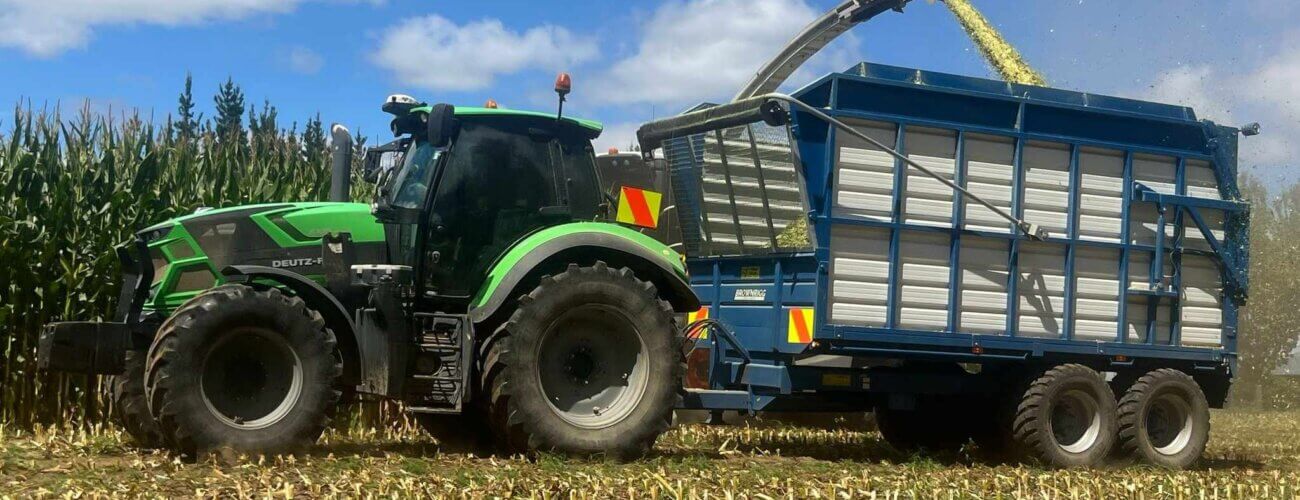
When your maize crop reaches harvest time, your focus should shift from maximising yield and quality to minimising losses. Proper stack management, combined with a proven maize silage inoculant, can help retain more dry matter and essential nutrients, ensuring the best possible feed for your livestock.
Why Use a Silage Inoculant?
Most crops don’t naturally contain enough beneficial bacteria to drive fast and efficient fermentation. Silage inoculants introduce high concentrations of tested and proven “good” bacteria, which multiply during ensiling and regulate the fermentation process. This reduces energy and dry matter loss, resulting in higher feed energy for your cows to convert into more milk or meat.
Benefits of Silage Inoculants
Using a high-quality silage inoculant can provide several key advantages:
- Lower silage pH – Improves preservation and fermentation.
- Greater dry matter recovery – Reduces shrinkage, spoilage, and run-off.
- Improved silage digestibility – Increases feed energy levels.
- Better animal performance – Leads to more milk or meat per tonne of silage fed.
- Reduced heating – Helps prevent silage from heating at feed-out time.
Preventing Heat Build-up
Maize silage contains high levels of starch and sugars, making it more prone to heating at feed-out. A quality silage inoculant, such as Pioneer® brand 11C33RR, can help keep silage cooler for longer. A New Zealand trial found that maize silage treated with 11C33RR stayed cooler for 97 hours longer than untreated silage, allowing farmers to leave stacks open without the risk of heating and even feed out a day in advance.
Best Practices for Effective Silage Management
Compact Well
Good compaction removes air from the silage stack, allowing fermentation to begin. To achieve this:
- Match the size and number of compaction vehicles with the rate of silage delivery.
- Spread maize in thin layers (100-150 mm) to ensure even compaction.
Seal the Stack Properly
- Secure the edges of the stack or bunker using sand or lime.
- Use a high-quality plastic cover and weigh it down with tyres that are touching.
- Place rodent bait stations around the stack and refill them regularly to prevent damage.
Opening Stacks or Bunkers
While maize silage can be fed out immediately, its nutritional value improves over time as fermentation enhances nutrient availability, particularly starch. Keeping a reserve of maize silage on hand allows you to feed last season’s silage while the new batch ferments.
Face and Pace Management
Two key factors in reducing silage losses are managing the stack face and controlling feed-out rates:
- Design your bunker or stack to allow the removal of 15-20 cm from the face daily.
- Keep the stack face tight throughout the feed-out period to limit air exposure, reducing the risk of mould growth and spoilage while preserving energy and dry matter.
